Does PRP regrow hair permanently? Platelet-rich plasma (PRP) therapy can stimulate meaningful, visible hair regrowth, but it is not a one-and-done permanent fix. Like most biological treatments, PRP works best as an ongoing part of your hair health strategy, especially since the underlying causes of thinning hair, such as genetics, hormones, and aging, do not go away after a single session. At Grand Pearl Spa, in Grand Rapids, Michigan, we help patients understand exactly what PRP can and cannot do before they begin treatment.
Key Takeaways
-
PRP regrowth is not permanent, but it can be long-lasting with maintenance. Most patients need periodic touch-up sessions every 4-6 months to sustain results over time.
-
Initial results typically require 3-4 monthly sessions. Visible improvement in hair density and thickness usually appears within 3-6 months of starting treatment.
-
PRP works by stimulating dormant hair follicles with growth factors from your own blood. This reactivates follicles in the anagen (growth) phase rather than creating new ones.
-
Maintenance treatments are needed because hair loss triggers like genetics and hormones persist. Without upkeep, gains from PRP gradually fade as natural shedding and follicle miniaturization resume.
-
PRP works best combined with other therapies for long-term results. Pairing PRP with Keravive or a physician-guided plan often produces more durable outcomes than PRP alone.
If you are curious whether PRP is right for your hair loss pattern, schedule a consultation with our team. We can evaluate your scalp, discuss your goals, and build an approach tailored to your wellness journey.
How PRP stimulates hair growth
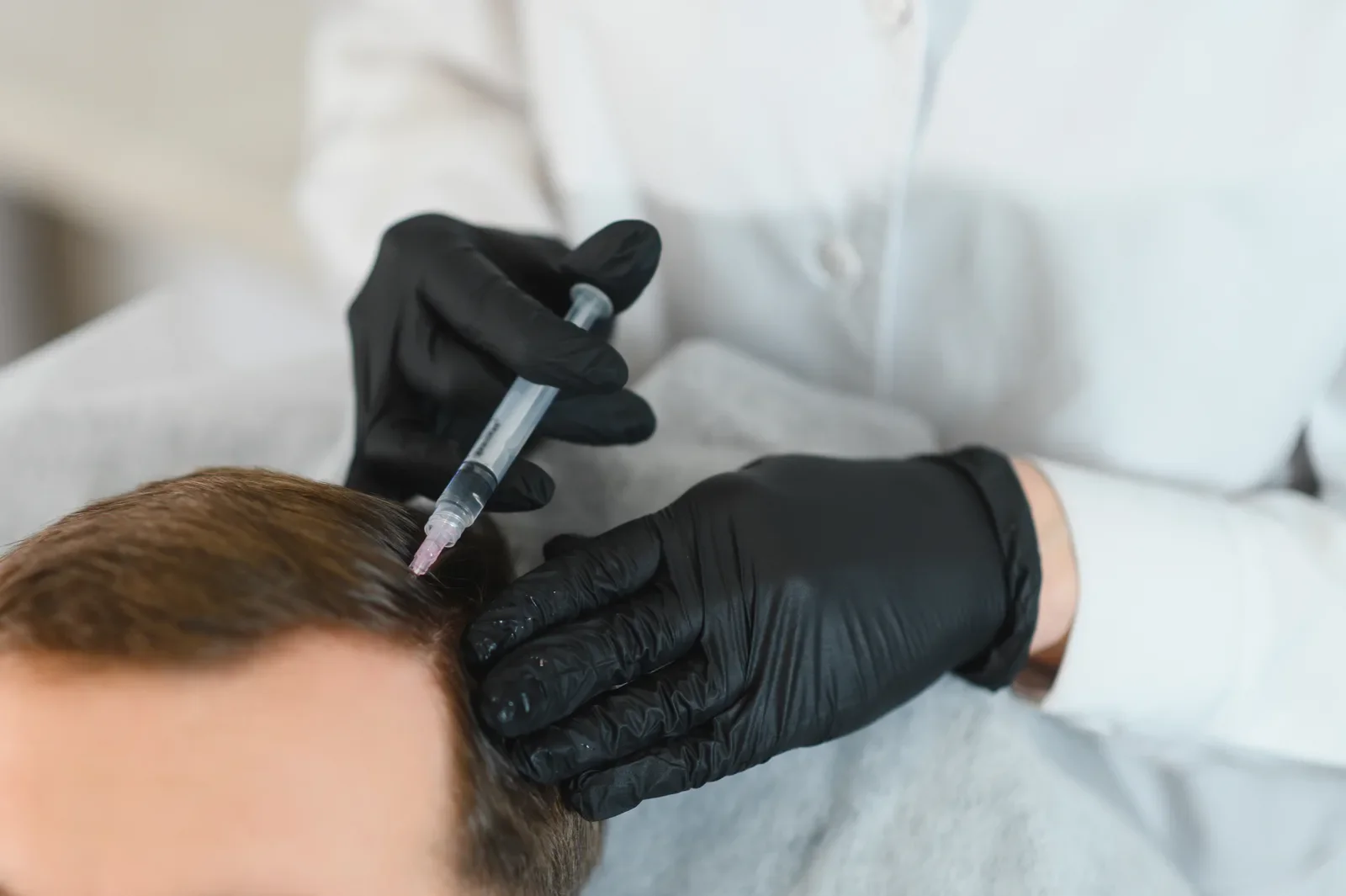
Platelet-rich plasma therapy uses a concentrated sample of your own blood, spun in a centrifuge to isolate growth-factor-rich platelets. That plasma is then injected into the scalp at the level of the hair follicles. The growth factors signal dormant or weakened follicles to re-enter the anagen, or active growth, phase.
This process does not create new follicles. Instead, it revives existing follicles that have shrunk or gone dormant due to hormonal shifts, stress, or genetic predisposition. For many patients, this translates into thicker strands and reduced shedding rather than an entirely new head of hair. Our PRP injections work by harnessing your body’s own natural healing power, which is part of what makes the treatment appealing to patients seeking a scientifically proven, non-surgical option.
What to expect from PRP results
Most patients notice reduced shedding within 6-8 weeks and visible improvements in hair density around the 3-6 month mark. Results build gradually rather than appearing overnight, which is typical of regenerative treatments that rely on your body’s own repair mechanisms.
A standard treatment plan involves an initial series of 3-4 sessions spaced about 4-6 weeks apart. During your consultation, our team will assess your scalp, hair loss pattern, and medical history to set realistic expectations for your specific case. You can review detailed timelines and photos in our guide on PRP hair treatment results and what to expect. Results vary based on the severity of thinning, age, and how consistently you follow the recommended schedule.
Does PRP regrow hair permanently after the initial series?
No, PRP does not permanently regrow hair after the initial series alone. The gains achieved during your first round of treatments typically need to be reinforced with maintenance sessions to prevent gradual reversal.
Longevity of PRP hair regrowth
PRP hair regrowth results generally last 9-12 months after a completed initial series before noticeable fading begins in most patients. This timeline varies depending on your baseline hair loss severity, hormonal factors, and how your body responds to the growth factor stimulation.
Because PRP encourages existing follicles to function better rather than permanently altering your genetic hair loss trajectory, the underlying causes of thinning, such as androgenetic alopecia or hormonal changes, continue in the background. This is why PRP is best understood as a results-extending treatment rather than a cure. Many patients considering their options also explore non-surgical ways to regrow hair as part of a broader, long-term approach to maintaining density.
When maintenance treatments are needed
Maintenance PRP sessions are typically needed every 4-6 months once your initial series is complete. Without these periodic touch-ups, follicles that were reactivated during treatment can gradually slow back down, and shedding patterns may return closer to your pre-treatment baseline.
Several factors influence how often you will need maintenance, including:
-
Genetic hair loss patterns: Patients with strong hereditary thinning often need more frequent sessions to sustain density.
-
Hormonal changes: Menopause, thyroid shifts, or other hormonal transitions can accelerate the need for touch-ups.
-
Age and scalp health: Older patients or those with compromised scalp circulation may see results fade faster.
-
Lifestyle factors: Stress, nutrition, and sleep quality all influence how long regrowth is sustained.
Our physician-guided team will help you establish a maintenance cadence based on how your scalp responds, adjusting the schedule as needed to protect your investment.
PRP as part of a long-term hair loss plan
PRP works best as one component of a broader, long-term hair loss plan rather than a standalone permanent solution. Combining PRP with complementary treatments can extend and enhance your results significantly compared to PRP alone.
At Grand Pearl Spa, we often pair PRP with treatments like Keravive to support overall scalp health, hydration, and follicle function between PRP sessions. Some patients also explore our full introduction to PRP to understand how it fits alongside other wellness services. According to the American Academy of Dermatology, consistent, combined approaches tend to produce more durable outcomes for pattern hair loss than any single treatment used in isolation.
Because hair loss causes vary so widely, from genetics to hormones to stress, an approach built around your specific situation matters. Our hair restoration services are designed around your specific pattern of thinning, your goals, and your timeline, giving you a transformation strategy built for the long run rather than a single-session solution.
Frequently asked questions about PRP and permanent hair regrowth
Does PRP regrow hair permanently?
No, PRP does not regrow hair permanently on its own. It stimulates existing follicles to become more active, but ongoing maintenance sessions every 4-6 months are typically needed to sustain results.
How long does PRP hair regrowth last?
PRP hair regrowth typically lasts 9-12 months after completing an initial series of treatments. Results gradually fade without maintenance because the underlying causes of hair thinning remain present.
How many PRP sessions are needed for hair regrowth?
Most patients start with 3-4 sessions spaced 4-6 weeks apart to build initial results. After that, maintenance treatments every 4-6 months help sustain density over time.
Is PRP for hair loss painful?
PRP injections involve some mild discomfort, similar to a series of small pinpricks across the scalp. Most patients tolerate the treatment well, and topical numbing can be used to improve comfort.
Who is a good candidate for PRP hair treatment?
Good candidates typically have early to moderate thinning with some active follicles remaining, rather than completely bald areas with no follicle activity. A consultation with our team can determine whether PRP or a combination approach suits your hair loss pattern.
Can PRP be combined with other hair loss treatments?
Yes, PRP is often combined with treatments like Keravive or other scalp health services for more comprehensive, longer-lasting results. Combining approaches addresses both follicle stimulation and overall scalp condition.
Ready to explore whether PRP fits your hair restoration goals? Contact Grand Pearl Spa, in Grand Rapids, Michigan, to schedule your consultation and start building a hair regrowth plan designed for lasting results.
we’d love to meet you
Schedule a consultation
Are you ready to take the first step towards achieving your goals? Schedule a consultation with us today! Request an appointment in our online form or call us at (616) 888-3100.
Have a Question?